

What a peel may address
A peel uses a preparation applied to the skin to produce controlled exfoliation. It may be considered for certain variations in tone or texture. A pigmented lesion may need a diagnosis before any aesthetic procedure; peels do not treat all pigmentation or all scars in the same way.
AHA and retinol involve different protocols
Alpha-hydroxy-acid peels and retinol-based peels may differ in application, removal and home-care instructions. The specific product and protocol are explained in consultation. Phototype, sun exposure and products already used help determine the approach.
Before / after
An example of a possible treatment outcome.
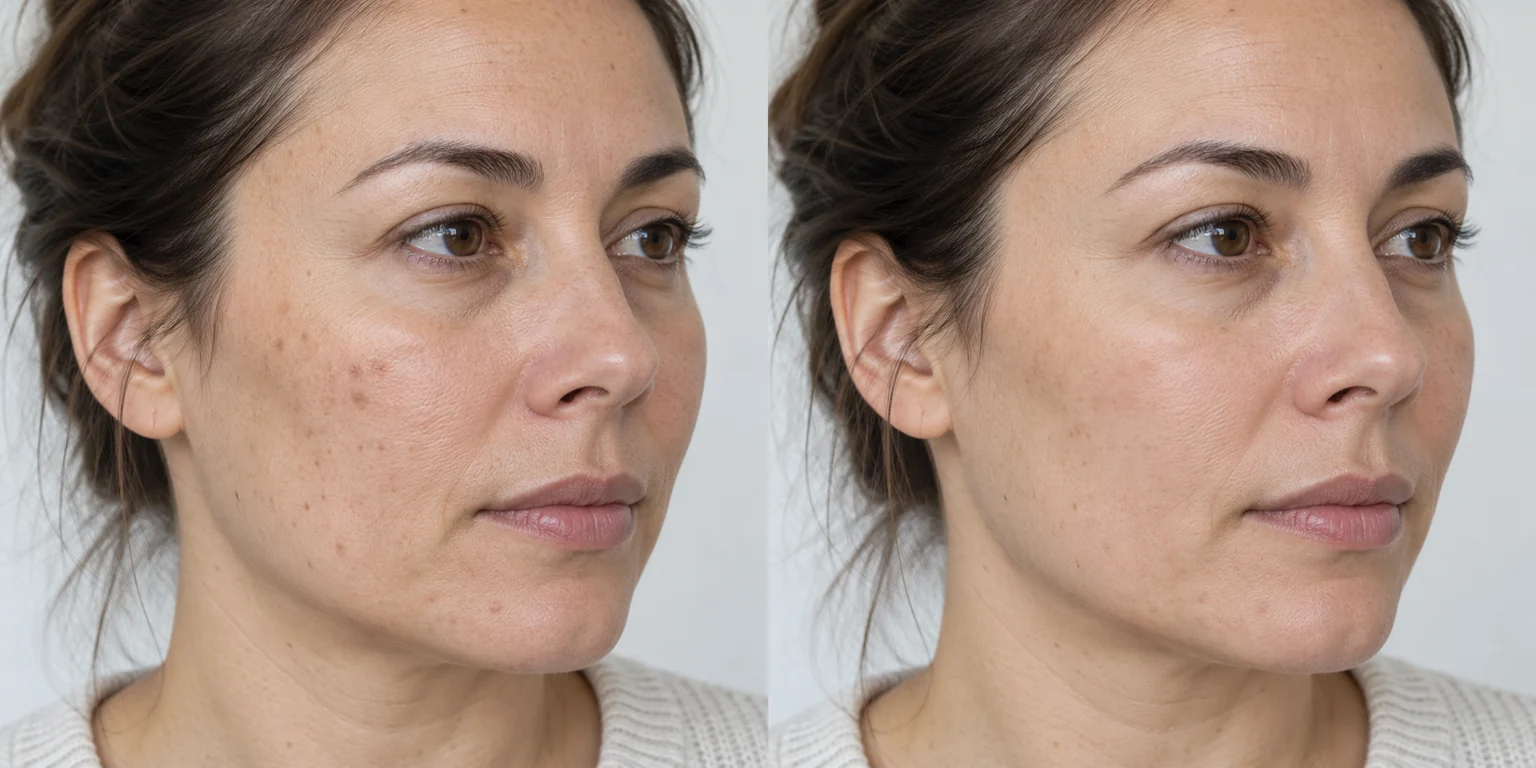
Repeated retinol peels: skin quality & texture
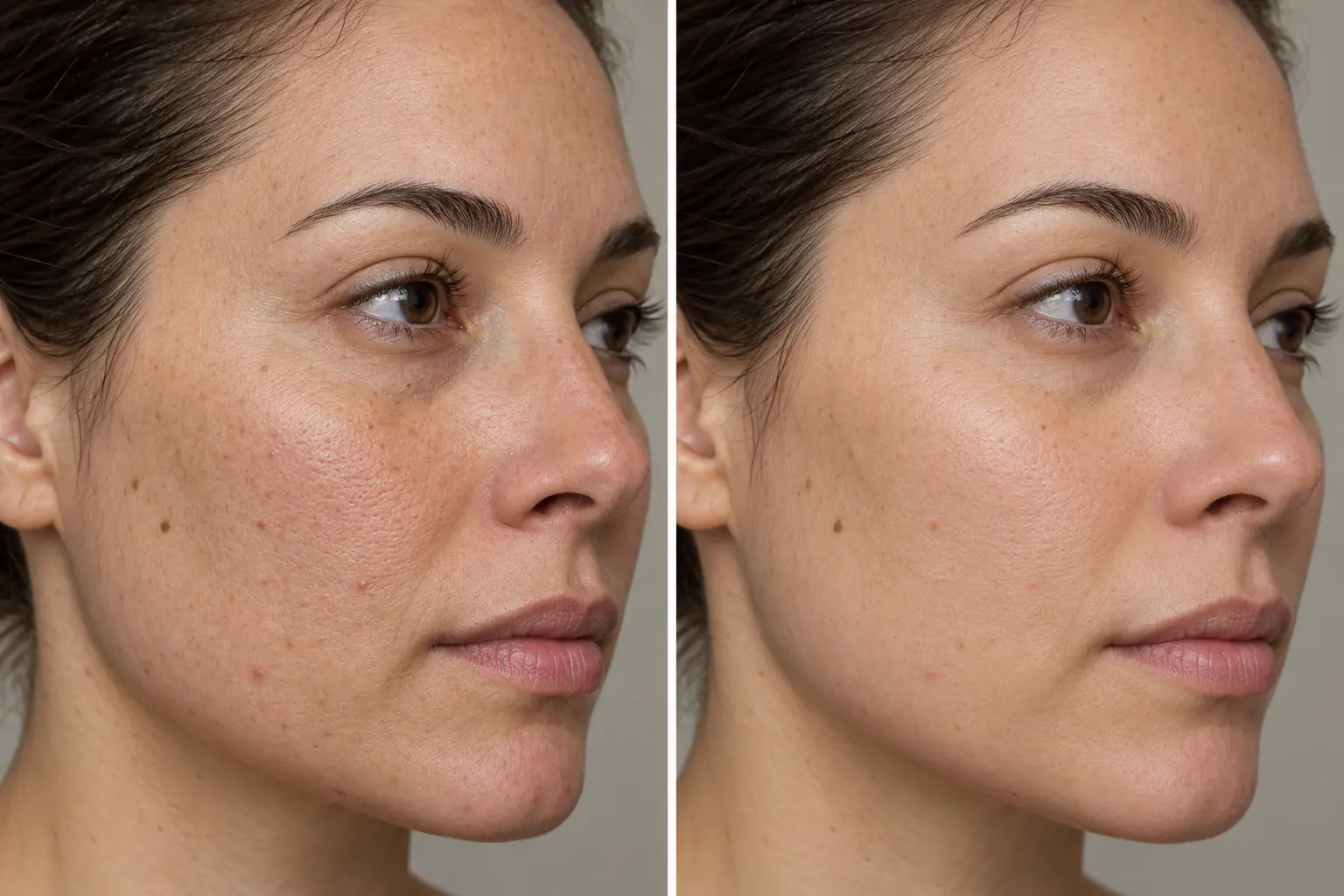
These comparisons illustrate possible changes; they do not document treated patients. Actual outcomes and the number of sessions vary.
Preparation is part of treatment
A preparatory skincare routine may be prescribed. Mention pregnancy, breastfeeding, herpes, irritation and all treatments, especially retinoids. Your doctor specifies which products to continue or pause, timing and sun protection. Do not use aggressive preparation or additional exfoliation without instructions.
Recovery and risks
Tingling, redness, dryness and flaking vary with the peel. Risks include prolonged irritation, burns, infection, post-inflammatory pigmentation and, more rarely, scarring. Unusual pain or a significant reaction warrants contacting your care team. Do not pull off peeling skin.
Sessions and fees
The plan is individualised; several sessions may be discussed according to the indication and tolerance. Peels start from €150 per session, depending on product and area. The initial €120 aesthetic consultation is separate. A quotation explains the protocol and expected overall cost, without automatic commitment to a course.
Your questions
Are peels suitable for every skin type?
Phototype and skin condition are key. Pigmentary risk must be assessed and preparation adapted.
Will I need time off work?
Recovery varies: redness and flaking can be visible. Timing should be discussed according to the protocol and your commitments.
Can I sunbathe afterwards?
Sun protection and limiting exposure are part of the aftercare. Specific timing depends on the procedure.
How should I read the before-and-after examples?
The comparisons are illustrative simulations of possible changes in tone or texture. They do not document a treated patient. The peel, number of sessions and actual improvement depend on the skin, indication and follow-up.
References and further reading
- American Academy of Dermatology · Chemical peels: FAQs (new tab)
- American Academy of Dermatology · Chemical peels: preparation (new tab)
Manufacturer instructions describe a product; they do not guarantee clinical results. Information on this website does not replace a consultation.

