
Identifying the type of scar
Indented scars, raised scars and red or pigmented marks after inflammation are different. Several may coexist. The examination also checks for active acne, which may need treatment before its after-effects are addressed. Standardised photographs can support monitoring when taken as part of clinical care.
Scars after surgery.


Scars after surgery
A surgical scar may remain flat and linear, appear red or pigmented, widen or become raised. Its appearance changes over time. Age, location, symptoms and a tendency to thick scarring are assessed before discussing options. A recent scar may require a different approach from a mature one; treatment is selected according to its type rather than a reference photograph.
Before / after
Illustrative projection after four nonablative fractional FRAX laser sessions. The aim is a partial improvement in texture; scars remain visible.
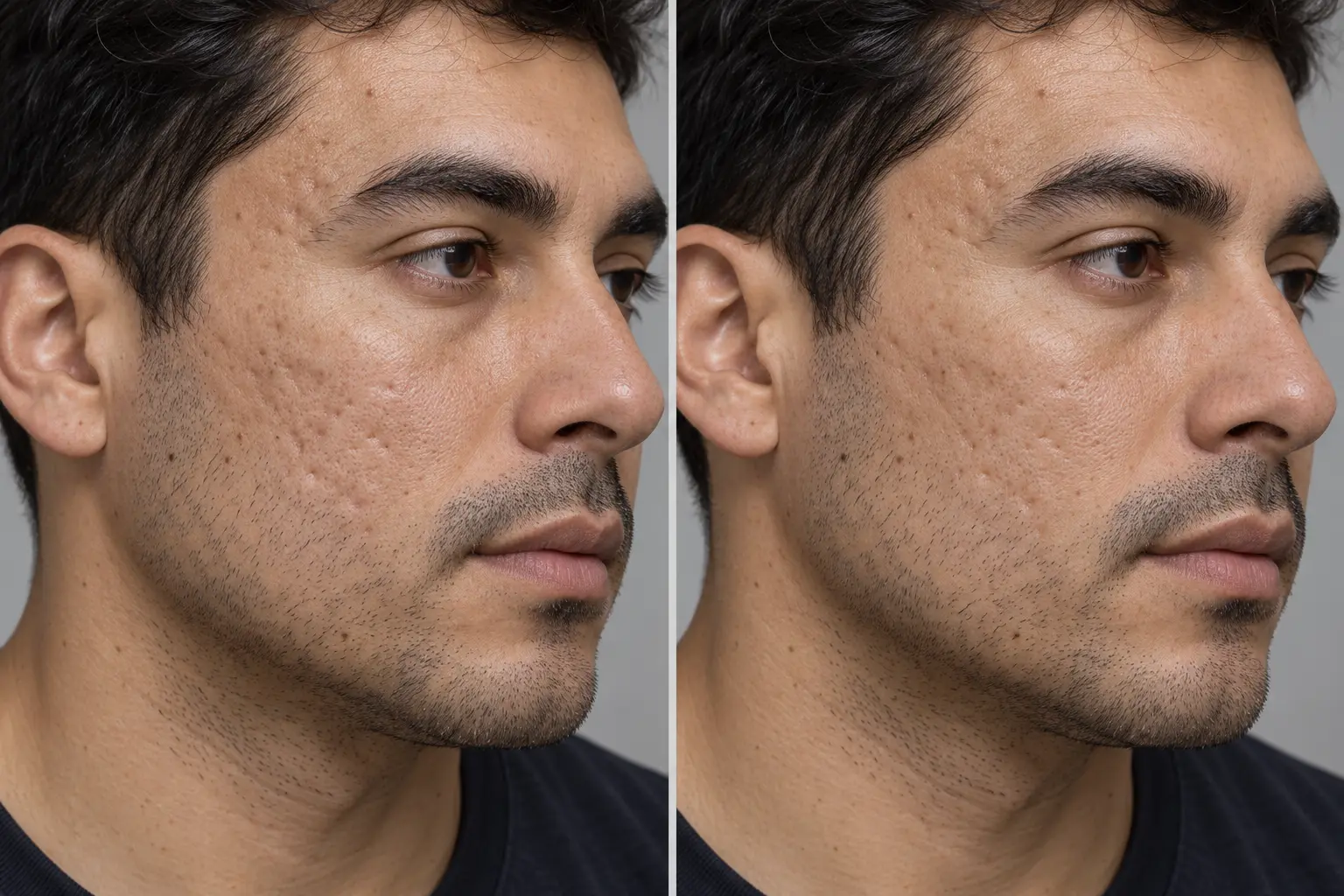
These comparisons illustrate possible changes; they do not document treated patients. Actual outcomes and the number of sessions vary.
Selecting an appropriate approach
Non-ablative fractional laser may be considered to improve selected irregularities. Other approaches, sometimes combined, depend on scar type: targeted procedures, microneedling or filling techniques in selected indications. One method does not suit every scar. A device is selected after this assessment.
Understanding realistic goals
The aim is improvement rather than complete removal. Several sessions and time for change may be needed. Scar age, phototype, depth, previous treatments and acceptable downtime influence planning. The likely benefit and number of sessions are discussed without promising a percentage improvement.
Preparation, recovery and risks
Mention current treatments, herpes history, a tendency to thick scars and recent sun exposure. Redness, warmth, swelling and temporary texture changes are possible. Burns, infection, pigment changes and scarring are risks. Aftercare and sun-exposure intervals are explained for the specific protocol.
Your questions
Can laser remove all scars?
No. It may improve some scars. Combined care or no procedure may be more appropriate.
What if my acne is still active?
Active acne should be assessed within the care plan. A medical appointment may come before discussing aesthetic treatment.
How much does it cost?
A quotation follows examination of the area, scar type and proposed treatment. The initial aesthetic consultation is €120.
References and further reading
- American Academy of Dermatology · Acne scars: consultation and treatment (new tab)
- Desai et al. · Cosmetic procedures in patients with skin of color (2023) (new tab)
Manufacturer instructions describe a product; they do not guarantee clinical results. Information on this website does not replace a consultation.

